
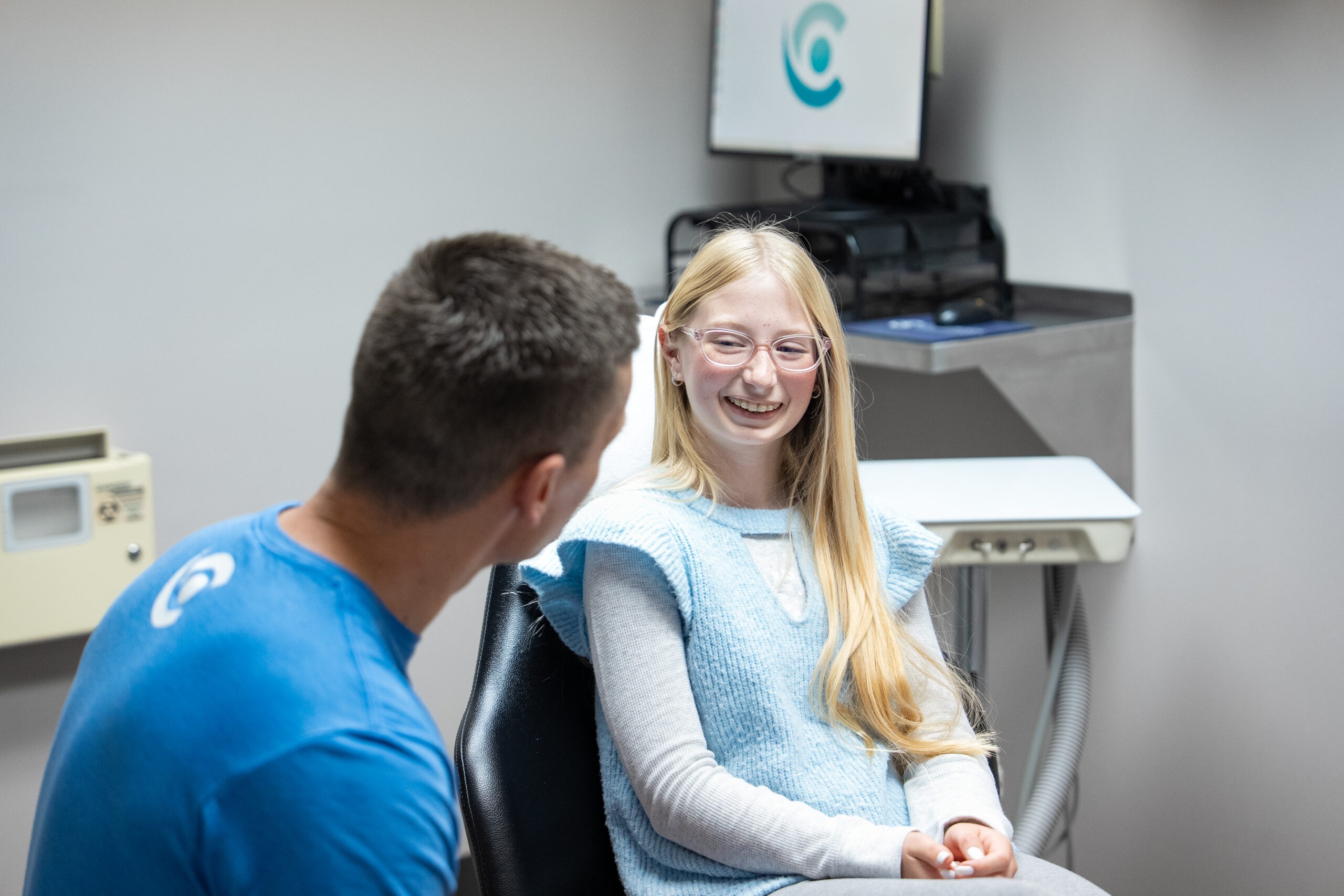
Spotting the signs your child may need to see an orthodontist early can save your family time and worry down the road. Kids’ smiles change fast, and some bite or spacing issues are easier to guide while the jaw is still growing. The good news? An early orthodontic evaluation is simple, low-pressure, and often reassuring. At Clabaugh Orthodontics, your free consult with Dr. Clabaugh gives you a clear picture of what (if anything) your child needs now.
What Early Orthodontic Evaluation Means for Children
An early orthodontic evaluation is a screening by age 7, recommended by the American Association of Orthodontists (AAO), where a board-certified orthodontist checks your child’s bite, jaw growth, and tooth development. It does not mean your child is getting braces that day. Most early visits end with simple monitoring, not treatment.
Why age 7? That’s when the first permanent molars and front teeth usually come in. This mix of baby and adult teeth gives Dr. Clabaugh a clear view of how everything is lining up. He can spot patterns that aren’t obvious yet to parents or even general dentists. Early visibility matters because small shifts caught at this stage often take far less effort to correct than the same issues addressed years later.
During an early visit, the team at Clabaugh Orthodontics looks at:
- How the upper and lower teeth fit together
- Jaw growth and facial symmetry
- Whether permanent teeth have room to come in
- Any habits that might be shifting the bite
Many parents leave feeling reassured. If treatment isn’t needed yet, your child can join our smile squad for ongoing growth checks. Clabaugh Orthodontics offers free consultations, so there’s no risk in getting answers early.
How an Early Orthodontic Screening Works
A screening at Clabaugh Orthodontics is short, comfortable, and family-friendly. Here’s what you can expect during your child’s first visit with Dr. Clabaugh.
- Warm welcome and health history. Our team greets you, reviews your child’s dental background, and answers any starting questions.
- Visual exam. Dr. Clabaugh checks the teeth, bite, jaw alignment, and facial symmetry. He also looks at how the lips and tongue rest.
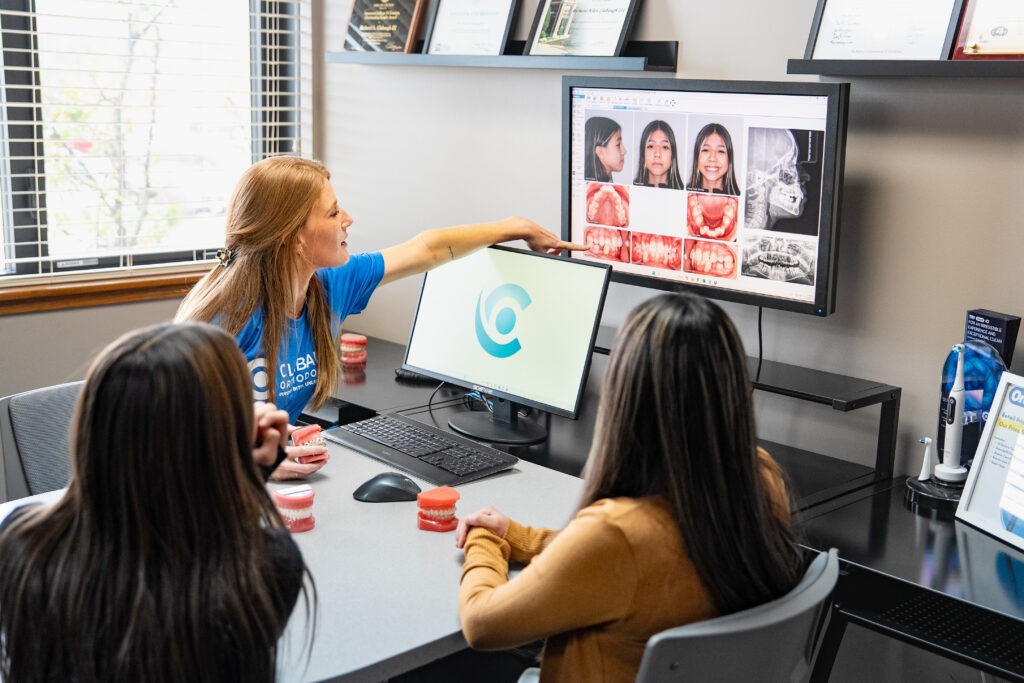
- Digital scans or X-rays (if needed). These help us see unerupted permanent teeth, root positions, and jaw structure without any messy impressions.
- Habit review. We ask about thumb-sucking, pacifier use, mouth breathing, snoring, and tongue posture. These small habits can shape the bite over time.
- Clear recommendations. Dr. Clabaugh walks you through what he sees in plain language.
From there, there are three possible outcomes:
- No treatment needed. Your child’s growth is on track.
- Monitor and wait. We watch things over time through our smile squad program, usually every 6 to 12 months.
- Begin Phase 1 treatment. A short, targeted plan to guide growth now.
The whole visit is brief and comfortable, and you’ll leave with answers, not pressure. Dr. Clabaugh and his team believe parents deserve honest guidance, so you’ll never be pushed toward treatment your child doesn’t need.
Benefits of Catching Orthodontic Issues Early
Early evaluation isn’t about rushing into braces. It’s about using the window when your child’s jaw and face are still growing to make future care simpler. According to the AAO, children should see an orthodontist by age 7 for this exact reason: some issues are far easier to guide early than fix later.
How Does Early Treatment Guide Jaw Growth?
While the bones are still developing, Dr. Clabaugh can gently influence how the upper and lower jaws align, creating a stronger foundation for permanent teeth. Making room now can also prevent crowding that would otherwise require removing teeth down the road. Thumb-sucking, tongue thrusting, and prolonged pacifier use can push teeth out of place, and early action helps break these patterns before they cause bigger shifts. A balanced bite means easier chewing, clearer speech, and less wear on the teeth.
What Long-Term Benefits Come From Early Care?
Expanders or space maintainers can open up room so adult teeth erupt in the right spots instead of getting stuck or coming in crooked. Addressing narrow palates or mouth breathing early can also improve airflow and rest. Kids who feel good about their smile tend to speak up more, smile more, and feel more at ease in social settings. Straighter teeth are easier to brush and floss, which lowers the risk of cavities and gum issues later.
Dr. Clabaugh is a board-certified orthodontist, and he’s seen firsthand how a small adjustment at age 8 can prevent a much bigger plan at age 15. That’s the real value of catching things early: not more treatment, but smarter treatment.
Phase 1 vs. Phase 2 Treatment: What Parents Should Know
Not every child needs two phases of orthodontic care. Many kids skip Phase 1 entirely and move straight to Phase 2 in their teens. Understanding the difference helps you make confident choices.
Phase 1 (Interceptive Treatment) typically happens between ages 6 and 10, while your child still has a mix of baby and permanent teeth. The goal is to guide jaw growth, create space, and correct bite issues before they get bigger. Phase 1 is usually shorter and more targeted.
Phase 2 (Complete Treatment) usually starts around age 11 or later, once most permanent teeth have erupted. This is the full alignment phase, where braces or clear aligners move teeth into their final positions.
Here’s a side-by-side look:
| Factor | Phase 1 | Phase 2 |
|---|---|---|
| Typical Age | 6–10 years | 11+ years |
| Teeth Present | Mix of baby and permanent | Mostly or all permanent |
| Duration | 6–12 months (varies) | 12–24 months (varies) |
| Common Appliances | Palatal expanders, partial braces, space maintainers | Full braces, clear braces, clear aligners |
| Main Goal | Guide growth, correct bite, make space | Perfect alignment and finishing |
Common Phase 1 tools include:
- Palatal expanders to widen a narrow upper jaw
- Partial braces on a few front teeth to fix a specific issue
- Space maintainers to hold room for incoming adult teeth
- Habit appliances to help stop thumb-sucking or tongue thrusting
Remember: Phase 1 is only recommended when it will truly make a difference. Dr. Clabaugh won’t suggest it just because your child is the right age. If waiting is the better call, that’s what you’ll hear.
Insurance and Financing for Early Orthodontic Care
Every child’s plan is different, and the first step is always free at Clabaugh Orthodontics. Our free consultation lets you understand your options before making any decisions. Phase 1 treatment is usually shorter and more focused than full braces.
Here’s what shapes your child’s plan:
- Type of appliance. An expander and a full set of braces work very differently.
- Length of treatment. Shorter plans mean fewer visits.
- Insurance coverage. Many plans include orthodontic benefits for children.
- Payment flexibility. We offer flexible financing options, and HSA/FSA funds are commonly accepted.
- Long-term benefits. Catching issues early may reduce the need for extractions or more involved care later.
Dr. Clabaugh and the team at Clabaugh Orthodontics will walk you through your options so there are no surprises. We believe parents should feel informed at every step. If you want to understand how insurance or financing might apply to your child, our team is happy to break it all down during your free consult.
Signs Your Child Is a Candidate for an Early Visit
Wondering if it’s time to book a visit? Here are the signs the AAO and Dr. Clabaugh look for when deciding whether a child could benefit from early evaluation:
- Crowded, crooked, or widely spaced teeth that don’t seem to have room to settle in
- Visible bite issues like an overbite, underbite, crossbite, or open bite
- Mouth breathing, snoring, or chronic open-mouth posture, especially during sleep
- Difficulty chewing or biting certain foods, or food getting caught in odd ways
- Speech concerns such as a lisp or trouble with certain sounds
- Jaw clicking, popping, or shifting to one side when opening or closing
- Baby teeth that fall out too early, too late, or in an unusual order
- Thumb-sucking or pacifier use past age 5
- Teeth that don’t meet properly when the mouth is closed
If you’ve noticed any of these, a free consult with Dr. Richard Clabaugh can give you clear answers. Even one visit can bring peace of mind, and in many cases, parents leave feeling relieved that nothing urgent is going on. Call Clabaugh Orthodontics today to schedule your child’s free evaluation and take the first simple step.
Frequently Asked Questions
How early can a child see an orthodontist?
A child can see an orthodontist as young as age 7. The AAO recommends this as the ideal time for a first screening because the first permanent molars and front teeth have usually come in, giving the orthodontist a clear view of how the bite is developing. At Clabaugh Orthodontics, this first visit is always free, so families can get real answers right away. If you’d like to learn more or set up a visit for your child, reaching out to Clabaugh Orthodontics is a simple, no-pressure next step.
Is 7 years old too early for braces?
Age 7 is the right age for an evaluation, but it’s usually too early for full braces. Most 7-year-olds who visit Dr. Clabaugh need no treatment at all, or they’re placed in our smile squad for monitoring. A small number may benefit from Phase 1 treatment with an expander or partial braces, but full braces almost always wait until more permanent teeth are in.
Is 12 too early for braces?
Age 12 is often an ideal time for braces or clear aligners. By this age, most permanent teeth have erupted, which makes it a great window for Phase 2 treatment. Treating around this age also means your child can benefit from active jaw growth, which can help teeth move more efficiently.
How do I know if my child really needs braces?
The only way to know for sure is an evaluation by a board-certified orthodontist. Visible signs like crowding, bite issues, or jaw clicking are helpful clues, but some issues are hidden under the gums. Dr. Clabaugh uses visual exams and digital scans to give you a complete picture, and he’ll be straightforward about whether treatment is truly needed.
Does an early visit always lead to treatment?
No. Many early visits result in a simple “see you in six months” plan, not braces. Dr. Clabaugh only recommends treatment when it will make a meaningful difference. If your child doesn’t need anything yet, you’ll leave with that answer and a monitoring schedule, nothing more. That honest, low-pressure approach is a big part of why families return visit after visit, and why kids feel comfortable sitting in the chair.