
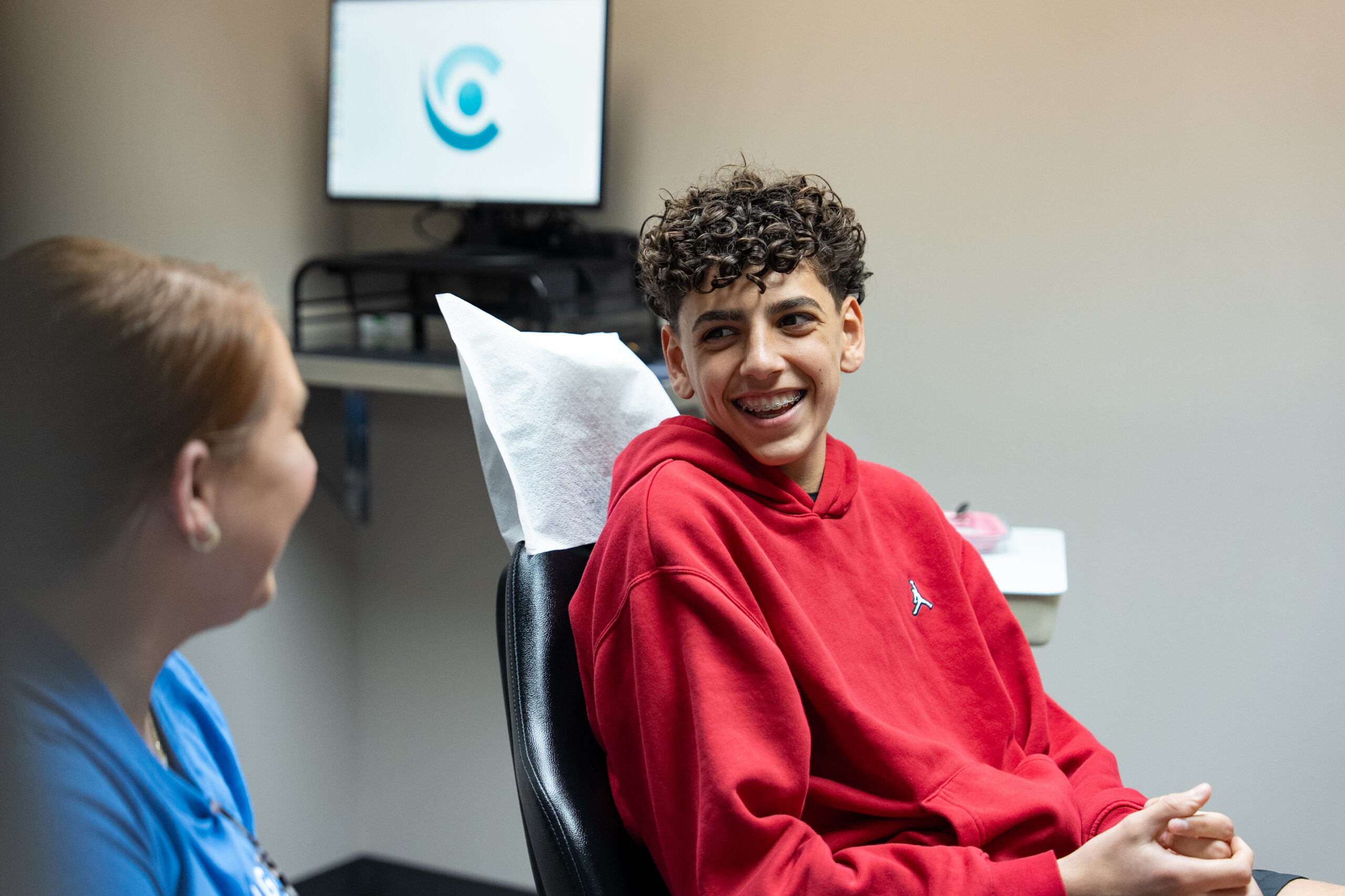
Parents often assume orthodontic treatment begins when all of a child’s permanent teeth have come in. That might be true for some children, but many orthodontic issues develop years before braces ever enter the conversation.
If you have ever wondered when your child should have their first orthodontic visit, you are not alone. It is one of the most common questions parents ask. At Clabaugh Orthodontics, Dr. Clabaugh enjoys helping parents understand their child’s growth and development.
Why Age 7 Is Recommended By A Child Orthodontist Lincoln Families Trust
The American Association of Orthodontists recommends that children see an orthodontist by age 7. By this age, children typically have a mix of baby teeth and permanent teeth. This stage provides orthodontists with a valuable view of how the teeth, jaws, and bite are developing.
An early evaluation allows Dr. Clabaugh to identify concerns such as:
- Crowding
- Crossbites
- Underbites
- Overbites
- Narrow dental arches
- Impacted teeth
- Jaw growth issues
Many of these problems are easier to address when a child is still growing. That doesn’t mean every issue requires immediate treatment. Sometimes the best recommendation is simply observation. Knowing what is happening beneath the surface can help families make informed decisions as their child grows.
Early Orthodontics Lincoln Parents Should Know About
Early orthodontics refers to treatment that occurs before all permanent teeth have erupted. Orthodontists sometimes refer to this as Phase One treatment.
The goal is not necessarily to create a perfect smile right away. Instead, early treatment focuses on improving jaw development, creating room for permanent teeth, and addressing problems before they become more complicated.
Many children never need Phase One treatment. Others benefit significantly from it. Every child develops differently, which is why individualized evaluations matter.
Signs Your Child May Need An Earlier Evaluation
Even if your child is younger than 7, certain signs may indicate the need for an orthodontic consultation. You may want to schedule an appointment if you notice:
- Early or late loss of baby teeth
- Difficulty chewing or biting
- Mouth breathing
- Thumb sucking beyond early childhood
- Teeth that appear crowded
- Teeth that do not meet properly
- Shifting jaw positions
- Speech difficulties related to tooth or jaw alignment
Some orthodontic concerns are obvious. Others are developing beneath the gums where parents cannot see them. An orthodontic evaluation helps uncover issues before they become larger challenges.
What Happens During Your Child’s First Orthodontic Visit?
Many parents worry their child will feel nervous about visiting an orthodontist for the first time. At Clabaugh Orthodontics, the experience is designed to be welcoming and informative. During the appointment, Dr. Clabaugh will evaluate your child’s:
- Teeth alignment
- Bite relationship
- Jaw growth
- Facial development
- Spacing and crowding
- Eruption patterns of permanent teeth
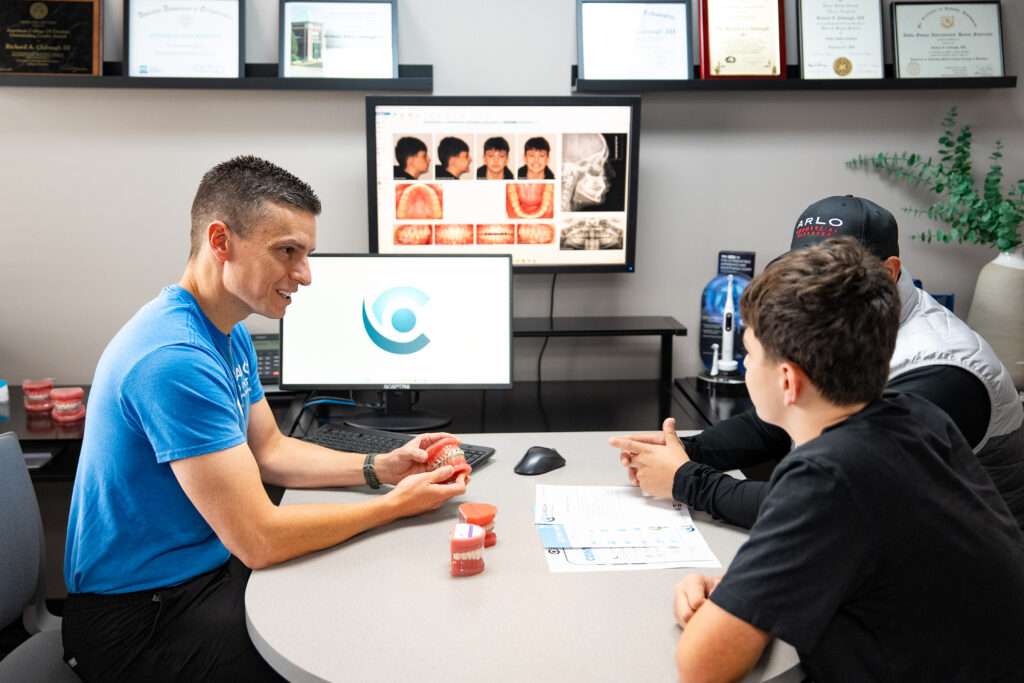
Digital imaging may also be used to see what is happening beneath the surface.
One thing many families appreciate is that parents are encouraged to participate. Dr. Clabaugh welcomes parents into the treatment area because it helps everyone stay informed and work together toward the same goal.
Common Early Treatments And Why They Matter
When early treatment is recommended, it often involves helping the jaws and teeth develop properly rather than focusing solely on straightening teeth.
Palatal Expanders
A palatal expander widens the upper jaw. Children’s bones are still developing, which makes expansion more effective during younger years. Expansion can help create space for incoming teeth and improve bite relationships.
We do this because the jaw needs time to stabilize and hold its new shape. Keeping the appliance in place allows new bone to develop and supports long-term results.
Limited Braces
Some children benefit from braces on a select group of teeth during Phase One treatment. This approach can help correct specific issues, improve tooth positioning, and create a better foundation for future treatment if needed.
Habit Appliances
Certain appliances can help address habits such as prolonged thumb sucking or tongue positioning concerns that affect dental development.
Each treatment recommendation is based on your child’s specific needs and growth patterns.
Does Early Treatment Mean Fewer Braces Later?
This is a question many parents ask when discussing when to start braces for Lincoln children who may need them. The answer depends on the individual child. Early treatment can sometimes reduce the complexity of future treatment. It may help avoid tooth extractions, improve jaw relationships, or shorten the amount of time spent in braces later.
However, early treatment does not always eliminate the need for future orthodontic care. Many children who complete Phase One treatment return for a second phase during their teenage years after all permanent teeth have erupted. The advantage is that the second phase is often more straightforward because major developmental concerns have already been addressed.
What If My Child Is Not Ready For Treatment?
One of the most valuable outcomes of an early orthodontic evaluation is discovering that treatment is not needed yet. Many children fall into this category.
At Clabaugh Orthodontics, children who are not ready for treatment can participate in the Smile Squad observation program. Smile Squad helps children become familiar with the orthodontic office while allowing Dr. Clabaugh to monitor their growth over time. Kids receive fun perks, including:
- A Smile Squad T-shirt
- Cotton candy visits
- Annual birthday cards
- Regular growth monitoring
Families often enjoy having a trusted orthodontic home before treatment begins. It creates familiarity and helps children feel comfortable long before braces become part of the conversation. As a smaller practice, many patients feel like family. Programs like Smile Squad help strengthen those relationships while supporting healthy development.
Best Age For Braces Lincoln Parents Should Know
There’s no universal answer to the question of the best age for braces. Some children begin treatment earlier because of developmental concerns. Others wait until most permanent teeth have erupted. For many patients, comprehensive braces treatment begins between the ages of 11 and 14.
During these years:
- Most permanent teeth are present.
- Jaw growth is still active.
- Orthodontic movement is often highly efficient.
The right timing depends on your child’s unique needs, growth pattern, and orthodontic goals.
That is why evaluations are more important than relying on age alone.
Why Monitoring Growth Makes Such A Difference
Orthodontics is about much more than straight teeth. Jaw development, facial growth, and bite function all play important roles in creating healthy, lasting results.
When Dr. Clabaugh evaluates children early, he can monitor these changes as they happen. That allows him to recommend treatment at the right time rather than reacting after problems become more difficult to address.
Because patients see Dr. Clabaugh at every active treatment visit, families receive consistent care and guidance throughout the process. That continuity helps parents feel informed and confident at every stage.

Give Your Child the Gift of a New Smile
Scheduling an orthodontic evaluation at age 7 does not mean your child needs braces immediately. It simply gives you information. Some children will need early treatment. Others will join the Smile Squad and return periodically for observation. Many will leave with peace of mind and a plan for the future.
If you are looking for an orthodontist that your family can trust, Clabaugh Orthodontics provides thoughtful evaluations, personalized recommendations, and a welcoming environment where parents stay involved every step of the way. If your child is seven years or older and is ready to get started on their smile journey, schedule their free consultation at our Lincoln office today–we’d love to get to know you!