

Both work well. The right pick comes down to you. This guide breaks down clear braces vs. metal braces so you can weigh them against your smile goals, your daily routine, and your budget, and show up to your free consult already knowing the right questions to ask. Before you compare price tags or bracket colors, it helps to understand what each system is made of, how it moves teeth, and where one holds a real advantage over the other.
What Are Clear Braces and Metal Braces?
Clear braces and metal braces differ in one main way: bracket material. Clear braces use tooth-colored ceramic or composite brackets shade-matched to your enamel. Metal braces use polished stainless steel brackets and archwires. Both are fixed appliances bonded directly to your teeth, and both move teeth with steady, controlled pressure over time.
Clear braces blend in. From a few feet away, most people notice your smile before they notice the brackets. Dr. Clabaugh can pair clear brackets with tooth-colored or frosted wires when you want the lowest-profile look possible.
Metal braces are the most widely used fixed appliance in orthodontics, and for good reason. Today’s brackets are smaller, smoother, and more comfortable than the ones you remember from the ’90s. Classic choice, modern comfort.
One clarification that saves a lot of confusion: clear braces are not the same thing as clear aligners. Here’s the quick difference.
- Clear braces are fixed. Ceramic brackets stay bonded to your teeth for the length of treatment, connected by a wire.
- Clear aligners are removable. You wear a series of custom trays (Invisalign and Spark are two brands we use at Clabaugh Orthodontics) and take them out to eat and brush.
Both approaches improve your smile. They just do it differently, and one may suit your case better than the other.

How Clear and Metal Braces Move Your Teeth
The mechanics behind both systems are identical. Only the bracket material changes. Here’s what actually happens once your braces go on:
- Bonding. Each bracket is bonded to the front of a tooth with a dental adhesive. No drilling, no trimming of the tooth.
- Archwire placement. A thin archwire connects the brackets and applies light, continuous force. That gentle pressure signals the bone around each root to remodel, letting the tooth shift into a better position.
- Holding the wire. Elastic ligatures (the small colored or clear ties) or built-in self-ligating clips keep the wire seated in each bracket slot.
- Adjustment visits. You’ll see us roughly every 4 to 8 weeks so board-certified orthodontist Dr. Clabaugh can progress the wire sequence, moving from lighter, flexible wires early on to firmer wires that finish detailing your bite.
- Elastics when needed. Small rubber bands stretched between upper and lower brackets correct how your jaws meet. These work the same way with ceramic or steel brackets.
- Retainers. Once your braces come off, retainers hold the corrected position while the bone and gum tissue settle around the new alignment.
Because the force system is the same, a well-planned case with clear braces follows the same biological timeline as one with metal braces. What changes is how visible the hardware is along the way.
Expect some tenderness for a few days after bonding and after each wire change. It fades quickly, and soft foods plus over-the-counter relief handle it well. Most patients describe the feeling as tight or pressure-like rather than sharp, and it usually eases up by the third or fourth day. Orthodontic wax over a bracket that’s rubbing and a rinse with warm salt water both help in the meantime.
What Are the Benefits of Clear Braces vs. Metal Braces?
Both bracket types work around the clock, which is a real advantage. You can’t forget to wear them, so progress doesn’t depend on daily habits. That built-in consistency is one reason fixed appliances remain such a dependable choice for kids, teens, & adults with packed schedules.
Why Do Patients Choose Clear Braces?
- Discreet in photos and on camera. Ceramic brackets barely register in wedding photos, work presentations, or video calls.
- A favorite for adults and image-conscious teens. Smiles have no age limit, and clear braces make treatment feel less obvious during high school or a career-building stretch.
- Full fixed-appliance control with a softer look. You get the precision of braces without the bold metal appearance.
- Frosted or tooth-colored wire options for even more blending.
Why Do Patients Choose Metal Braces?
- Maximum strength. Stainless steel handles the toughest assignments, including significant crowding, deep bites, and extraction cases that require heavier mechanics.
- Typically the more budget-friendly option, since the materials cost less to produce and replace.
- Smaller bracket profile. Modern metal brackets are slimmer than ceramic ones, so they feel less bulky against the lips.
- Colored elastics. Kids and teens love picking school colors, birthday colors, or holiday combos at every visit.
Both options deliver precise, predictable tooth movement under the care of a board-certified orthodontist. There isn’t a “lesser” choice here, only the choice that fits your case and your life better. Plenty of patients arrive convinced they want one option and leave choosing the other once they see how each bracket actually looks against their own teeth.
Clear Braces vs. Metal Braces: Side-by-Side Comparison
Clear braces and metal braces work equally well for most cases. Clear braces cost more and use ceramic brackets that blend with enamel but can chip. Metal braces cost less, use stronger stainless steel brackets, and stay visible. Treatment time is similar, though complex cases sometimes favor metal for efficiency.
| Factor | Clear Braces | Metal Braces |
|---|---|---|
| Appearance | Blends with enamel, low profile | Clearly visible on the teeth |
| Material | Ceramic or composite brackets | Stainless steel brackets |
| Durability | More brittle; can chip or debond | Very strong, rarely fractures |
| Staining risk | Brackets resist stain; clear ties can discolor | Brackets and metal ties don’t stain |
| Comfort | Slightly bulkier brackets | Slim, smooth, low-profile brackets |
| Cost | Generally higher | Generally lower |
| Treatment time | Comparable; occasionally a bit longer | Comparable; efficient in complex cases |
| Best for | Adults, professionals, teens wanting discretion | Complex bites, athletes, younger kids |
A few details worth understanding before you decide:
Visibility
Ceramic brackets pick up the shade of the tooth behind them, so they read as “texture” rather than hardware in most lighting. Metal reflects light and stands out.
Durability
Ceramic is harder but more brittle than steel. A chipped or debonded clear bracket means an extra visit for a repair, which can nudge your timeline.
Staining
The brackets themselves resist stain. The clear elastic ties are the part that can pick up color from deeply pigmented foods and drinks, with coffee and curry being the usual suspects. We swap those ties at every adjustment visit, so any discoloration is temporary.
Treatment Time
Most cases finish in a similar window with either system. In some situations, Dr. Clabaugh may plan a slightly gentler force sequence with ceramic brackets, which can add a few months.
Bracket Size
Ceramic brackets sit a touch taller and wider than today’s metal brackets. Most patients adjust within the first week or two, and orthodontic wax smooths over any spot that rubs while your cheeks and lips get used to the hardware.
What Affects the Cost of Clear vs. Metal Braces?
Clear braces typically cost more than metal braces because ceramic brackets are more expensive to manufacture and occasionally need replacement if one chips. The bigger cost drivers, though, are case complexity and total treatment length. Insurance orthodontic benefits usually apply the same way to both bracket types.
| Cost factor | How it affects your total |
|---|---|
| Bracket material | Ceramic generally costs more than stainless steel |
| Case complexity | Bite correction and heavy crowding require more time and appliances |
| Treatment length | Longer plans mean more visits and materials |
| Repairs | Chipped or loose brackets may add visits |
| Retainers | Included in your plan and part of the long-term investment |
| Insurance benefit | Often a lifetime orthodontic maximum, applied to either option |
Ways to make either option work for your budget:
- Flexible monthly payment plans with a down payment that fits your situation
- HSA and FSA dollars, which can typically be applied to orthodontic care
- Insurance orthodontic benefits, which we’ll verify and file for you
- Family considerations, since some plans offer benefits when more than one child starts treatment
We don’t publish exact prices for a simple reason: every mouth is different. A free consultation at Clabaugh Orthodontics gives you an exact quote, a clear timeline, and payment numbers you can actually plan around. You’ll know your monthly amount, what your insurance benefit covers, and what’s due the day you start, with no guesswork and no pressure to decide on the spot.
Which Option Is Right for You?
There’s no universal winner. There’s the option that matches your bite, your schedule, and how you spend your days.
Are Clear Braces the Better Fit for You?
Clear braces tend to make sense if you:
- Work in a client-facing role or spend a lot of time on video calls
- Are an adult who wants correction without announcing it
- Are a teen who’d rather keep treatment low-key at school
- Have upcoming photos (graduation, wedding, headshots) during your treatment window
- Practice consistent brushing and are willing to be mindful about staining foods
Are Metal Braces the Better Fit for You?
Metal braces tend to make sense if you:
- Have significant crowding, spacing, or a bite that needs heavier correction
- Play contact sports or spend time in the weight room (paired with a mouthguard, steel holds up beautifully)
- Are a younger patient who’d love picking elastic colors at every visit
- Drink coffee or tea all day and don’t want to think about tie changes
- Want the most budget-friendly path to the same finish
What Should You Ask at Your Free Consult?
- Based on my scans and X-rays, would either option change my treatment time?
- Are there parts of my bite that would benefit from metal’s strength?
- How often would my elastic ties be changed?
- What’s the price difference between the two for my specific case?
- Which retainers will I need afterward, and what’s the wear schedule?
The American Association of Orthodontists recommends that kids have their first orthodontic check-up by age seven, and Dr. Clabaugh agrees. That early look often determines whether Phase 1 treatment makes sense, which shapes the bracket conversation later.
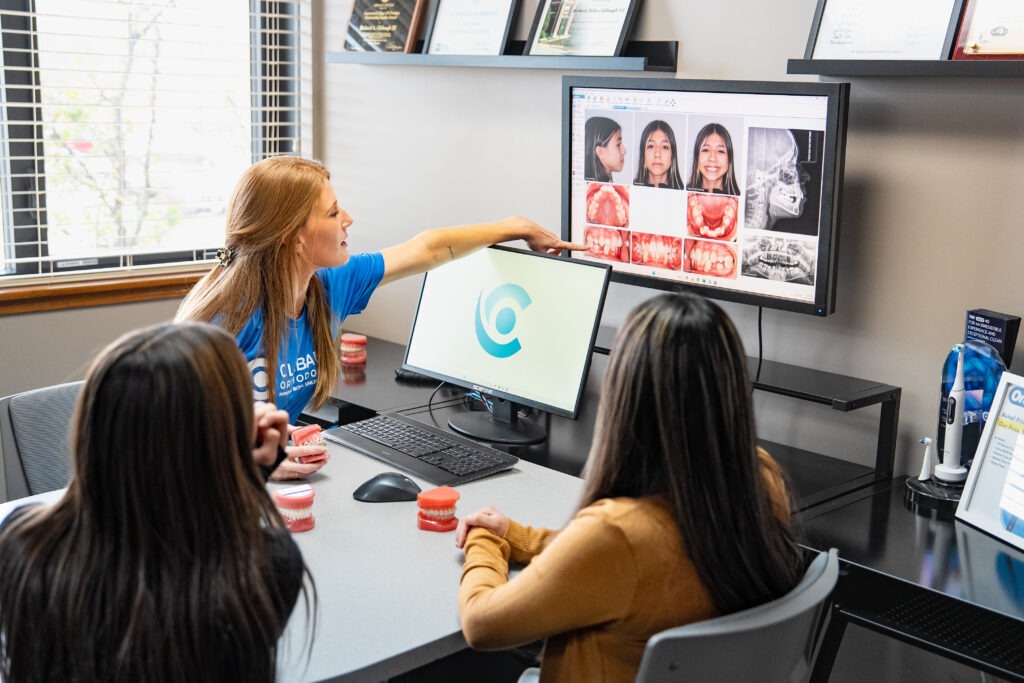
Whichever way you’re leaning, a board-certified orthodontist can tell you what your bite actually needs. Dr. Clabaugh will review your digital scans with you, point out what’s happening with your alignment, and explain why one bracket type may serve your case better than the other. Either way, the goal never changes: improving bites. unleashing smiles.®

Frequently Asked Questions
Are clear braces as effective as metal braces?
Yes. Clear braces use the same brackets-and-archwire mechanics as metal braces, so they move teeth just as accurately. For very complex bite corrections or cases requiring heavier force, Dr. Clabaugh may recommend metal brackets for added strength. He’ll tell you straight if that applies to your case.
Do clear braces stain or turn yellow?
The ceramic brackets themselves resist staining and stay clear throughout treatment. The small elastic ties holding the wire in place are what can pick up color from coffee, tea, red wine, curry, and tomato-based sauces. Those ties are replaced at every adjustment visit, usually every 4 to 8 weeks, so any discoloration is short-lived.
Do clear braces take longer than metal braces?
Usually not. Most cases finish in a comparable timeframe with either bracket type. In certain situations, a gentler force sequence or a chipped bracket repair can add a few months to a clear braces plan, which is something Dr. Clabaugh will factor into your estimated timeline upfront.
Are clear braces more expensive than metal braces?
Generally, yes. Ceramic brackets cost more to manufacture and occasionally need replacement, so clear braces carry a higher price than metal. The difference is often smaller than patients expect, and payment plans, HSA/FSA dollars, and insurance benefits apply to both. You’ll get exact numbers at your free consultation.
Are clear braces more comfortable than metal braces?
Comfort is similar between the two. Ceramic brackets sit slightly taller and wider, so some patients notice them against the lips a bit more in week one. Modern metal brackets are smaller and smoother than older designs. Both feel normal within a couple of weeks, and orthodontic wax helps during the adjustment period. Sticking to softer foods for the first two or three days makes that stretch easier as well.
Can teens get clear braces, or are they only for adults?
Teens absolutely can get clear braces, and many do. The main consideration is durability. Teens in contact sports or those still developing consistent oral hygiene habits sometimes do better with metal brackets plus a mouthguard. Durability, brushing habits, and practice schedules usually matter more than age when the recommendation gets made. Dr. Clabaugh evaluates each teen individually and gives families a straight recommendation.